2026-10-26
Pit-and-crane vs direct-dump: two ways to build a transfer station
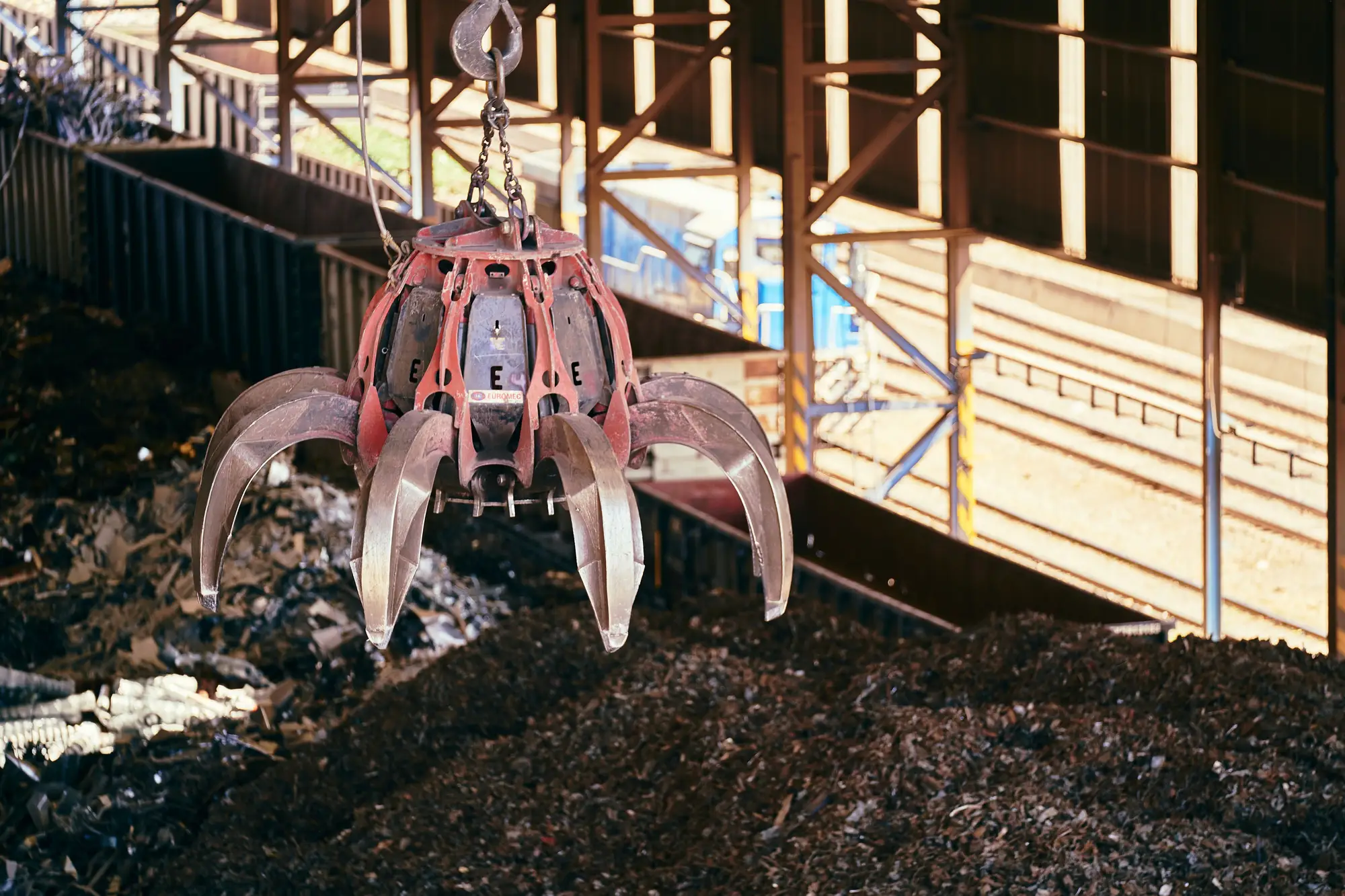
Two trucks pull up to two different transfer stations on the same morning, and the equipment sitting on the pad looks nothing alike. One has a crane boom swinging over a sunken pit. The other has three wheel loaders working a flat floor like it's a feedlot. Same job, hauling municipal solid waste from collection trucks into larger transfer trailers, two completely different builds.
If you're sizing a competitor's install base or your own fleet's footprint across a territory, knowing which design you're looking at tells you what kind of machines you should expect to find, and how many.
The pit-and-crane layout
A pit-and-crane station drops waste into a below-grade pit, usually with a retaining wall and a ramp for collection trucks to back up to the edge. A stationary or traveling hydraulic crane, fitted with a clamshell or grapple bucket, lifts waste out of the pit and loads it into transfer trailers parked in a bay underneath or alongside.
The crane does almost all the material handling. You might see a wheel loader on site for cleanup, stockpile work, or feeding a baler if the station also does some sorting, but the crane is the workhorse. From the air, the tell is the pit itself: a sunken rectangular bay, often with a visible boom structure fixed to a rail or a tower, and trailer loading bays positioned below the main tipping floor level rather than at grade.
Pit-and-crane stations tend to run fewer total pieces of mobile equipment on the pad at any given moment, because one crane is doing the work that would otherwise take two or three loaders. A low count at a pit-and-crane site isn't a sign of a thin fleet. It's the design.
The direct-dump (direct-tip) layout
A direct-dump station, also called direct-tip, skips the pit. Collection trucks back up to a flat or slightly elevated tipping floor and dump straight onto the slab. From there, wheel loaders push and stack the material, then push it again into open-top trailers, a compactor, or onto a conveyor feeding a baler or picking line.
This is where the loader count climbs. A busy direct-tip floor can have two, three, sometimes more wheel loaders moving at once, plus a skid steer or compact track loader working corners and doorways a full-size loader can't reach. Some larger direct-tip stations add a stationary compactor at the trailer bay to push volume up before the trailer rolls. From above, the tell is a flat tipping floor at a consistent grade, truck bays on one side, trailer or rail-car loading on the other, and no sunken pit or crane structure anywhere on the footprint.
Push-pit variants sit in between: still a below-grade bay, but material gets pushed by a loader rather than lifted by a crane. If you see a pit with a loader parked at the edge instead of a crane boom, that's what you're looking at.
Why the design matters for fleet counts
A territory plan built off trade-show chatter or a drive-by survey tends to flatten all this into "transfer station, X trucks seen." That throws away the signal. A pit-and-crane site with two loaders parked for the week isn't under-equipped. A direct-tip site with one loader idle on a Tuesday might be between shifts, not understaffed. Reading the station type first tells you what a normal equipment count looks like before you start comparing sites to each other.
Waste Site Equipment reads annual VHR imagery of transfer stations, MRFs, and composting sites and returns a pad-by-pad inventory of the shredders, screens, loaders, and handlers standing on them, so you're working from a list you can run a territory plan against instead of a guess, with counts that update once a year as the install base shifts.
Next time you're scoping a competitor's facility, start with the pit. It tells you more about the equipment roster than the truck count ever will.