2026-11-16
What is a picking line, and why a satellite can't count it
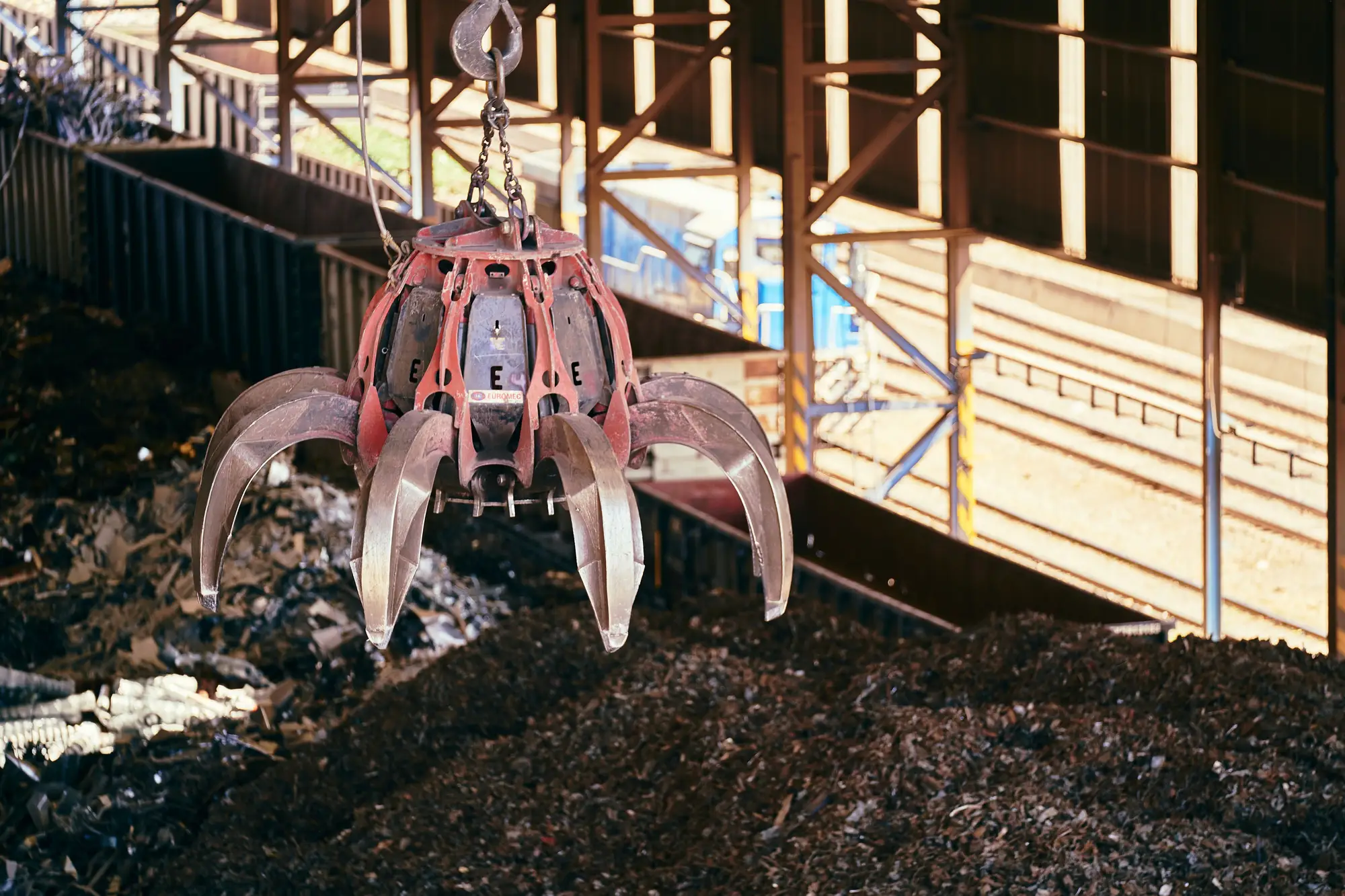
If you've walked a MRF floor, you know a picking line isn't one machine. It's a run of equipment: an infeed conveyor pulling material off the tip floor, a primary screen (trommel or disc) splitting fiber from containers, picking stations where sorters, human or robotic optical units, pull contaminants and target streams, maybe an eddy current separator for aluminum, and a baler or two at the far end compacting whatever's left into bales for the scale.
None of that sits outside. All of it sits inside the building, under a roof, usually with the only outdoor clue being a baler ram or a conveyor stub poking through a wall opening.
Overhead imagery stops at the roofline, and it always has. A satellite or aerial pass reading a MRF site never sees inside that building, no matter how sharp the sensor gets.
Why VHR imagery stops at the roofline
Very high resolution satellite and aerial imagery, the kind run at 0.5 m ground sample distance or finer, gives you a sharp, straight-down look at a site once a year. A shredder parked on the tipping pad gets counted. A mobile trommel screen staged in the yard reads differently from a stationary conveyor stacker next to it. A wheel loader moving between piles shows up as a loader, not a blur.
What that imagery can't do is see through a roof. RGB imagery, the kind without a thermal band, reads reflected light off whatever surface is facing the sensor. If that surface is a metal roof deck, that's all the pixel tells you. A picking line running full tilt inside a building looks identical, from above, to an idle one, or to an empty building with the lights off.
The camera looks straight down, the equipment sits under a roof, and no sharper sensor or extra pass next quarter changes that geometry.
What a pad-by-pad count misses at a MRF
Here's the honest list of MRF equipment inventory limits for anyone pricing out a competitor's install base from imagery alone. An annual overhead read won't tell you:
- How many picking stations a facility runs, or whether those stations are staffed or robotic
- What brand of optical sorter or eddy current separator is installed
- Whether the baler inside is running one shift or three
- Serial numbers, model years, or anything that would let you price out a used unit
What it will tell you is what's sitting on the pad: the mobile shredders, screens, loaders and material handlers staged in the yard, in the laydown area, or parked along the tipping apron, counted and positioned, refreshed each year so you can watch whether a competitor's yard fleet at a given transfer station grew, shrank, or turned over to a different brand.
Why the split still matters for territory planning
For a fleet sales manager at an equipment OEM, that split works in your favor once you see it clearly. The buying center for picking-line gear (optical sorters, balers, conveyor systems) is a capital-projects conversation that happens inside the building, between a MRF operator and a systems integrator, on a timeline measured in years. The buying center for mobile shredders, screens, loaders and handlers is a different conversation entirely, and it's the one playing out on the pad in plain view from above.
Knowing which competitor's loader is sitting at which transfer station, and whether that count went up or down since last year, is the data that drives a territory plan. Waste Site Equipment builds exactly that: a pad-by-pad read of the mobile fleet across the sites in your territory, pulled from annual VHR imagery, so you're running a plan against what's standing on the ground instead of what someone mentioned at a trade show.
If sizing competitor presence at transfer stations and MRFs is on your plate this year, that's the gap worth closing first.